




HOME / MEDITERRANEAN / RECIPES / SPECIAL DIETS / GLUTEN-FREE / LACTOSE-FREE / DINNER / LUNCH / SNACK / PULPO A LA GALLEGA
PULPO A LA GALLEGA RECIPE
How to Make Tender Spanish Octopus Step by Step
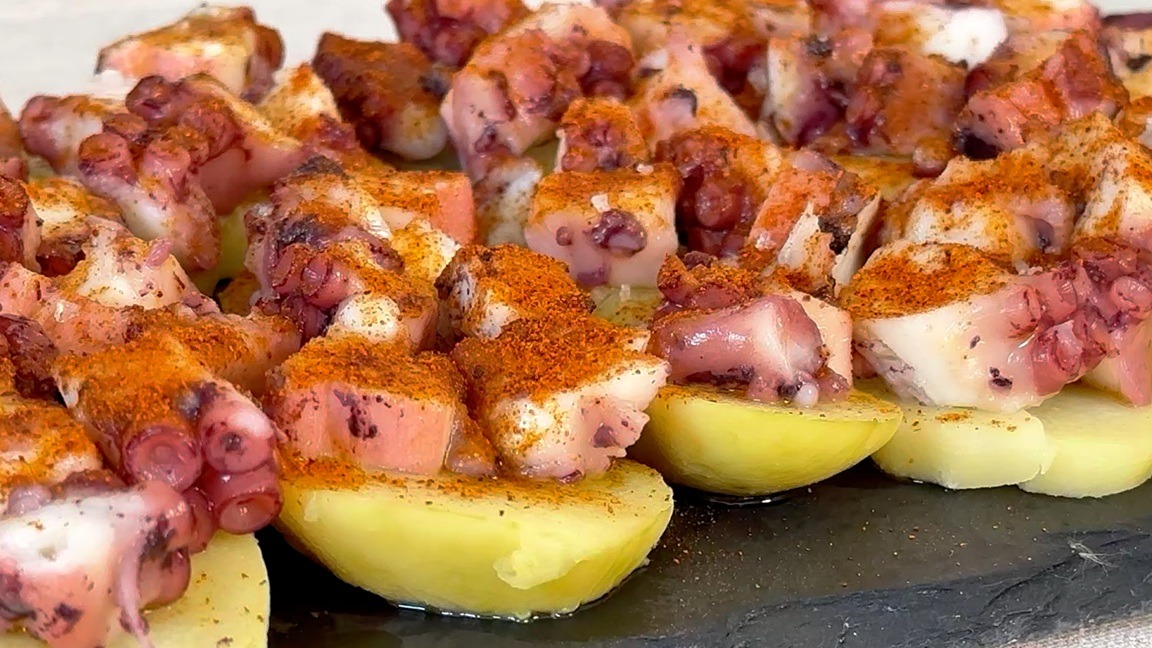
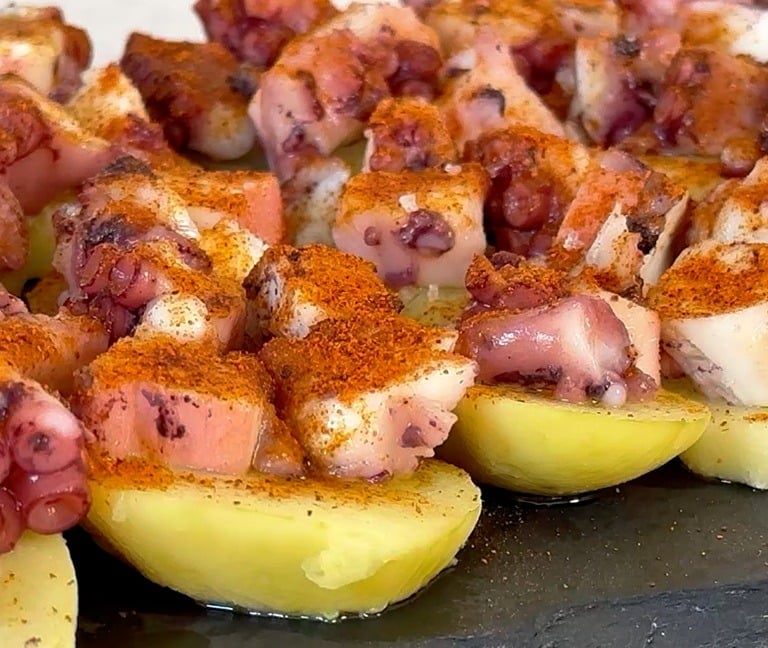
Pulpo a la Gallega is a simple yet flavorful Spanish dish, that highlights the natural taste and texture of octopus. Made with just a few ingredients like octopus, potatoes, paprika and olive oil, this traditional recipe is known for its tender bite and bold, smoky flavor. The key to a great result lies in the cooking technique, from properly handling the octopus to controlling the cooking time and resting phase, which together ensure a soft and juicy texture without becoming tough. If using fresh octopus, freezing and slowly thawing it helps break down the fibers, resulting in a more tender texture. It is traditionally served warm, simply seasoned, to highlight its natural flavors.
Key steps of the recipe are supported by short videos showing textures and techniques, and you’ll find the full video recipe at the end of the page.
RECIPE DETAILS
Prep Time: 15 minutes
Cook Time: 45 minutes
Total Time: 60 minutes
Servings: 4
Cuisine: Spanish (Mediterranean)
Special Diets: Gluten-Free, Lactose-Free
The quantities can be easily doubled or halved
RECIPE SCORECARD
APPROXIMATE NUTRITIONAL VALUES
OUR TAKE
Healthy:
Delicious:
Speed:
Ease:
9/10
Overall Score
Is one of our favorite go-to dishes when we want something that feels special without too much effort. It’s quick, simple, and packed with flavor. Octopus can be pricey, but using frozen octopus is more economical and helps achieve that perfect tenderness, as it slowly defrosts. We love enjoying it as a stand-alone dish, but it’s also perfect served as part of an appetizer, when we have friends over for dinner.
* Based on our internal rating system
Great for:
Per serving:
Calories:
Carbs:
Protein:
Fats:
* Calculated using standard ingredient databases
⭐⭐⭐⭐ ⭐
⭐⭐⭐⭐ ⭐
⭐⭐⭐⭐ ☆
⭐⭐⭐⭐ ☆
+ High-protein meals
+ Comfort meals
+ Entertaining & sharing
+ Everyday meals
1 of 4 portions
300 kcal
26 g
24 g
11 g
INGREDIENTS PULPO A LA GALLEGA
1 large octopus or 2 small (about 3.3 lb / 1.5 kg)
4 medium potatoes (about 1.3 lb / 600 g)
1/6 Cup (40 ml) Extra virgin olive oil, to taste
Sweet paprika (or smoked paprika, such as pimentón de la Vera), to taste
Coarse sea salt, to taste
HOW TO MAKE IT STEP BY STEP
1. Prepare the octopus
If using fresh octopus, freeze it for at least 24 hours to help tenderize it
Thaw it slowly in the refrigerator before cooking
Rinse it under cold running water to remove any residue
2. Bring water to a boil
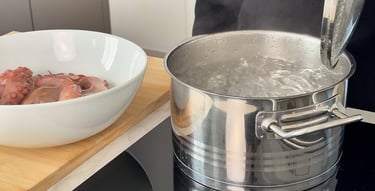
Fill a large pot with water
Bring it to a boil without adding salt
3. “Scare” the octopus
Hold the octopus by the head and dip the tentacles into the boiling water
Lift it out after a few seconds
Repeat this step 3 times
This helps the skin stay intact and improves the final texture
4. Cook the octopus
Fully submerge the octopus in the boiling water
Cover and cook over medium heat
Allow about 15 minutes per pound (30 minutes per kilogram)
Check doneness by inserting a fork into the thickest part—it should slide in easily
Turn off the heat and let the octopus cool in its cooking water
5. Cook the potatoes
Wash the potatoes thoroughly, leaving the skin on
Boil them until tender (about 20–25 minutes)
Drain, let them cool slightly, then peel
Cut into thick slices
Do you want to print or save the recipe?
6. Cut the octopus
Drain the octopus from its cooking water
Strain the cooking liquid and pour it into a container
Let it cool, then store it in the freezer for future use
Perfect for dishes like fish risotto or paella
Cut the tentacles into slices using kitchen scissors
7. Assemble and serve
Arrange the potato slices on a serving plate
Place the octopus pieces on top
Drizzle with extra virgin olive oil
Add a generous amount of paprika (sweet or smoked)
Sprinkle with coarse sea salt
Serve warm or slightly warm
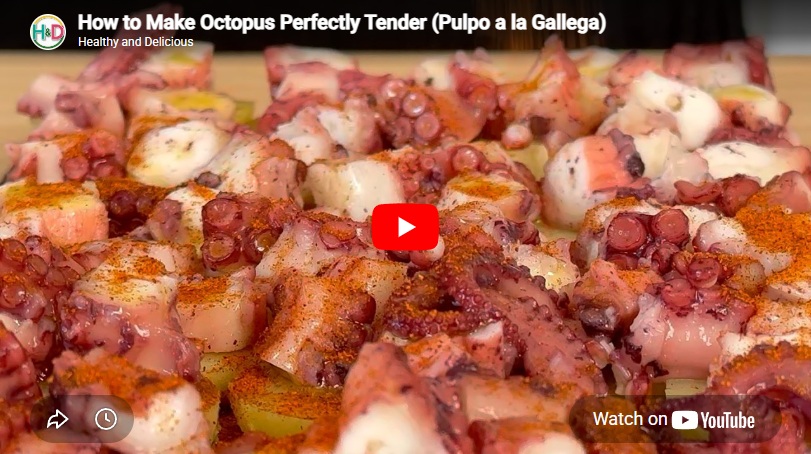
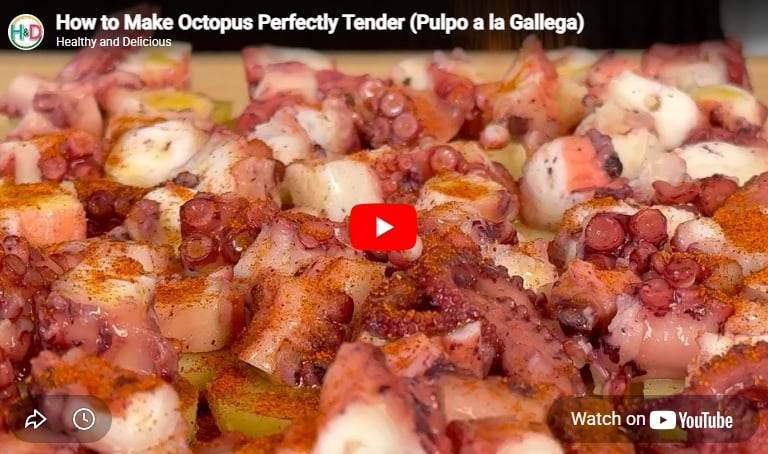
Watch the method


Watch the trick

Watch the cooking

Watch the potatoes

Watch the reuse

Watch the plating
To make a truly tender and flavorful pulpo a la gallega, a few key techniques make all the difference. One of the most important is the “scaring” method: briefly dipping the octopus into boiling water 3 times before cooking. This helps the skin stay intact and improves the final texture.
Cooking time is another crucial factor. As a general rule, cook the octopus for about 30 minutes per 2.2 lb (1 kg) or roughly 15 minutes per pound. If using multiple smaller octopus, the cooking time does not add up: for example, two 1 lb (500 g) octopus will still cook in about 30 minutes total, not one hour. The octopus is ready when a fork slides in easily but the flesh is still slightly firm.
After cooking, let the octopus rest in its own cooking water. This step allows the fibers to relax and helps retain moisture, resulting in a more tender and juicy texture.
If using fresh octopus, freezing it in advance is a useful technique. Ice crystals form during freezing and, as the octopus slowly thaws, they help break down the muscle fibers, making it more tender and preventing a rubbery result.
To keep the dish balanced and light, season just before serving. Octopus is naturally lean and high in protein, so a drizzle of extra virgin olive oil and a generous sprinkle of paprika are enough to enhance its flavor without overpowering it.
Pulpo a la gallega is naturally gluten-free and lactose-free, making it a great option for a wide range of dietary needs while still being satisfying and rich in protein.
In traditional Spanish versions, the potatoes are often cooked directly in the octopus cooking water, absorbing more flavor. In this recipe, the potatoes are cooked separately to keep their taste more delicate and to allow a different use for the cooking liquid.
The octopus cooking water is very flavorful and can be reused: strain it, let it cool, and freeze it in a container to use later as a base for example a seafood risotto or other dishes, adding depth and natural flavor.
For a deeper, smokier flavor, use smoked paprika instead of sweet paprika. For a milder version, reduce the paprika slightly and let the natural taste of the octopus stand out.
If you enjoy simple and versatile recipes, explore more gluten-free and lactose-free dishes on the site, perfect for lunch, dinner, or snacks, all supported by clear steps and short videos to guide each stage. You can also discover other traditional Spanish recipes, like tortilla de patatas, to bring more authentic flavors to your table.
TIPS FOR PERFECT RESULTS
RECIPE VARIATIONS
FAQs ABOUT PULPO A LA GALLEGA
How do you make octopus tender and not rubbery?
To make octopus tender, it’s important to control both preparation and cooking. Freezing and slowly thawing the octopus helps break down the fibers, while cooking it for the right amount of time (about 15 minutes per pound) prevents it from becoming tough. Letting it rest in its cooking water after boiling also helps keep it soft and juicy.
How long should you cook octopus?
Octopus should be cooked for about 15 minutes per pound (or 30 minutes per kilogram). The total cooking time depends on the size of the octopus, not the number of pieces. For example, two small octopus will cook in the same time as one large one of similar total weight. It’s ready when a fork slides in easily.
Why do you dip octopus in boiling water before cooking?
This technique, often called “scaring” the octopus, involves dipping it into boiling water 3 times before fully cooking it. It helps the tentacles curl, keeps the skin intact, and improves the overall texture of the octopus.

Explore all recipes by Special Diets: Lactose-Free | Gluten-Free | Vegan | Vegetarian


Explore all recipes by Meal Type: Breakfast | Lunch | Dinner | Snack
Contact
info@healthyandelicious.com
© 2026. All rights reserved.
Complete video library